
Statement
Organisation: Governor’s Office
Release Date: 13 January, 2026
Legislative Pillars of Progress: Building a Sustainable Nation
Introduction and Reflection
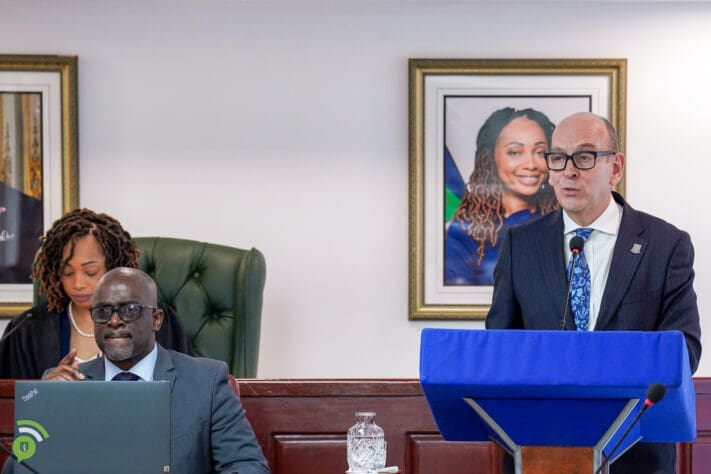
1. As Governor of these Virgin Islands, I am pleased to be here today to perform my constitutional responsibilities on behalf of His Majesty King Charles III in delivering the Speech from the Throne.
2. The Speech from the Throne is a tradition in the Commonwealth and Overseas Territories. It is written by the Government and delivered by the Head of State, or his or her Representative. The Speech from the Throne signals the opening of a new Session of the Legislature and previews the legislative agenda and major policies of the elected Government, as it seeks to achieve its objectives and responsibilities to the people during the upcoming Session of the House of Assembly.
3. Madam Speaker, the Second Session of this Fifth House of Assembly commenced on 7 January 2025 and continued until 31 December 2025. By all indications, it was a very productive session, as the House deliberated on some 25 Bills, 21 of which were passed and 18 of which have been assented to.
4. Legislations debated and passed during the last Session include the Asset Seizure and Forfeiture (Amendment) Act, the BVI Health Services Authority (Amendment) Act, 2024, amendments to the Customs Management and Duties Ordinance, 2010, the Commercial Recreational Vessels Licensing Act and refinements to the Cruising and Home Port Permit Act, 2021, the Tobacco Products Control (Amendment) Act, 2025 and Regulations, the BVI Business Companies and Limited Partnerships (Beneficial Ownership) (Amendment) Regulations, 2025, the Anti-Money Laundering (Amendment) Regulations, 2025, Immigration and Passport Act and Regulations, and many other measures.
5. In addition, Honourable Members debated on some 14 motions. Business attended to by the House included deliberations on the report of the Constitutional Review Commission and presentation of the Government of the Virgin Islands Self-Assessment Report on the Implementation of the Recommendations of the British Virgin Islands 2022 Commission of Inquiry Report.
6. Such a considerable volume of work reflects the commitment of the Legislature to its constitutional responsibilities and to the development and advancement of these Virgin Islands and its people.
7. Madam Speaker, persons would recall that in 2023, the government adopted the National Sustainable Development Plan (NSDP) as the development, fiscal and legislative blueprint for its strategy of building a sustainable nation. Successive Budget Addresses and Speeches from the Throne have been aligned with the NSDP’s six Goals and 17 National Outcomes, demonstrating the government’s commitment to the NSDP and maintaining continuity along the journey of sustainable development.
8. On this occasion, our format is no different. For this the Third Session of this Fifth House of Assembly – which opens today – the theme for this Speech from the Throne is “Legislative Pillars of Progress: Building a Sustainable Nation”, which aligns with the theme of the 2026 Budget Address delivered by the Honourable Premier on 6 November 2025 entitled “Pillars of Progress: Building a Sustainable Nation”. Likewise, the legislative agenda to be presented today outlines key Bills and proposed amendments to existing legislation that the Government will submit to the House of Assembly for consideration during the forthcoming Session. This agenda, together with additional priorities, is organised in alignment with the Goals and National Outcomes of the NSDP.
Economy
9. Let us begin with NSDP Goal 3 which focuses on the Economy, whose objective is a prosperous, vibrant, thriving and internationally competitive economy for the Virgin Islands.
10. Several items of legislation will be brought forward to advance economic development in a responsible and sustainable manner.
11. Madam Speaker, national outcome 4 for the economy calls for the Virgin Islands to achieve fiscal strength and sustainability. As such, the Government’s proposed legislative agenda continues to focus on sound governance, clarity of institutional roles, and prudent public financial management.
12. Amendments to the Public Procurement Act, 2021, are anticipated to streamline project implementation and clarify requirements relating to good standing, while complementary amendments to the Public Finance Management Regulations will repeal procurement-related provisions and ensure a clear separation of responsibilities within the public financial management framework.
13. Further amendments to the Mutual Legal Assistance (Tax Matters) Act are also anticipated, with the aim of strengthening international cooperation and reinforcing the Territory’s commitment to transparency and adherence to internationally accepted standards. These measures will continue to support the Virgin Islands’ standing within the global community and its obligations to international partners.
14. Madam Speaker, one major legislative goal for 2026 is amending the Virgin Islands Deposit Insurance Act. The proposed changes include adding the Ministry of Finance to the Board, making clear the Corporation’s ability to borrow money from the Government (with ministerial approval) specifically for deposit reimbursement or resolution, and setting formal rules for borrowing agreements and mandatory reporting to both the Minister and the House of Assembly. Additional amendments aim to reinforce the Deposit Insurance Fund with specified Government contributions, which should improve financial stability and boost depositor confidence while the fund is still in its early stages.
15. Consideration is also being given to the introduction of new pension legislation in 2026, possibly through a new Pension Act, with a view to addressing long-term sustainability, adequacy, and fiscal impact on the Government’s pension scheme. Alongside this, the proposed Professional Accountants Bill will establish a regulatory framework for the accounting and auditing profession, contributing to the integrity, credibility, and continued development of the financial services sector.
16. Amendments to the Public Finance Management Act, 2004, and the Public Finance Management Regulations, 2005, will also be brought forward. These will further strengthen accountability, transparency, and the effective management of public resources. These reforms are intended to ensure that the public financial management framework remains robust, coherent, and capable of supporting good governance across Government.
17. Madam Speaker, taken together, these legislative measures demonstrate a measured and responsible approach to governance, grounded in respect for the rule of law, institutional integrity, and the long-term interests of the people of the Virgin Islands.
18. Madam Speaker, national outcome 5 of the Economy calls for the Government to create an enabling business environment that will support economic growth and stability. This is a high priority of the Government.
19. Amendments to the Virgin Islands Investment Act, 2021 will be advanced to strategically transfer authority for Business Licensing, Business Development and Fair Trade (Consumer Protection and Competition) from the Trade Commission to the Minister and Ministry responsible for Trade. The functions of Investment Promotion and Trade and Export will be transferred to an autonomous body led by a board reporting to the Minister. This transition will be accompanied by a comprehensive restructuring of the Trade Department to ensure efficient delivery of services. This approach will better align trade policies with the Government’s broader economic development goals, ensuring a cohesive and strategic approach to fostering investment and economic growth in the Virgin Islands.
20. The Micro, Small, and Medium Enterprises Policy will be expanded with the introduction of a Micro, Small, and Medium Enterprise (MSME) Act. This comprehensive legislation will address the unique needs of MSMEs and create an enabling environment in which these vital businesses can develop, grow, and thrive, and it will support them through various stages of their development, from inception to expansion and beyond.
21. Amendments to the Business Licensing Act, 2022 will be advanced to further streamline the licensing process to reduce bureaucratic hurdles and foster a more dynamic economic environment.
22. Amendments to the Consumer Protection Act 2020 will further enhance its effectiveness by strengthening the promotion of good business practices and ensuring that consumer protection remains a top priority in our evolving economic landscape, particularly with regards to pricing.
23. The Gaming and Betting Act will be amended to improve the Gaming and Betting Control Board’s structure, update the licensing framework, and to address risks identified in the Mutual Evaluation Report. These changes will enhance Board governance and efficiency, establish a clearer licensing and supervision framework, improve compliance with financial regulations, boost revenue and investor confidence, and also maintain the Territory’s reputation as a well-regulated jurisdiction.
24. Madam Speaker, in 2026, the Government will finalise the National Employment Policy (NEP) which aims, from a national level, to strengthen the Virgin Islands’ rapidly evolving labour market, which demands that the local workforce—especially young people—be equipped with the skills needed to compete for current and emerging opportunities. The NEP will help to cultivate a highly skilled and adaptable local workforce while balancing the need to attract specialised foreign talent to support economic diversification. Virgin Islanders will be well equipped to establish a solid presence within the evolving labour market.
25. The Flexible Working Arrangements Bill is expected to be brought forward soon. The Bill, supported by policy, will outline the criteria and process for undertaking a flexible working arrangement. The implementation of this policy comes at a time where officers and employees continue to manoeuvre through their personal disaster recovery efforts and the challenges caused by pandemics and other events.
26. Madam Speaker, the financial services industry is constantly evolving, which also affects global standards for regulation, oversight, compliance, and collaboration. In 2026, the Financial Services Commission expects to present to the Government a recommendation for the enactment of a new Trust and Corporate Service Providers Bill to effectively decouple that regime from the current Banks and Trust Companies Act. Work has commenced in evaluating a standalone legislation on banking, with the plan of developing a new Banking Bill that takes account of the new and evolving developments in the banking sector; this will be complemented by a new Banking Code.
27. The Commission also proposes the enactment of a Credit Union Act which will create a licensing and supervisory regime for the two credit unions which currently operate in the Territory, strengthening compliance with international standards.
28. In the upcoming year, Madam Speaker, the Ministry of Environment, Natural Resources and Climate Change intends to undertake comprehensive legislative reform of the land management framework, including updates to the Registered Land Ordinance, the Non-Belonger Land Holding Policy, the Non-Belonger Land Holding Regulation Act, Land Surveyors Ordinance, and the Crown Lands Management Act. This reform will align land management laws with national priorities, streamline processes through computerisation, provide greater access to land for Virgin Islanders, safeguard local ownership rights, and support business growth, investor trust, and economic diversification.
29. Madam Speaker, national outcome 6 of the Economy goal calls the Virgin Islands to be a diversified economy with globally competitive industries.
30. The Government’s commitment to strengthening the tourism pillar will be encased in the Tourism Development Bill that will establish a modern framework for the sustainable development, regulation and management of tourism in the Virgin Islands. This legislation will support tourism product development and diversification, enhance competitiveness of the visitor experience, extend visitor stays, boost connections with local businesses and industries, and improve quality assurance, licensing, and data collection for better policy making and destination development and management.
31. The amendment of the Cinematography Act will establish the Film Commission as a statutory or a semi-autonomous body responsible for promoting, regulating, and facilitating film and audio-visual production in the Virgin Islands. The Commission will serve as a one-stop coordination mechanism for film permits, location management, incentives, and stakeholder engagement, while ensuring alignment with environmental, cultural, and community standards. The legislation will support the development of the creative and digital economy by attracting international and regional productions, building local technical and creative capacity, and enabling skills transfer, employment, and small-business participation.
32. An amendment to the Environment Protection and Tourism Improvement Act seeks to designate the defined percentage of funds collected under the Act for tourism product development, to be allocated directly to the Ministry of Tourism, Culture and Sustainable Development. The reform supports the establishment of a Product Development Unit in the Ministry and aims to ensure the predictability and strategic use of these funds, ensuring stronger alignment between revenue collection and tourism development priorities.
33. Madam Speaker, development of the BVI’s maritime sector is an important part of the Government’s diversification strategy. The ongoing BVI Maritime Law Review Project represents a comprehensive modernisation of the Territory’s maritime law, delivering a revised, updated, and consolidated legislative framework. In 2025, the Government published, enacted, and brought into force twenty statutory instruments, clarifying and simplifying the legal landscape and updating the framework for the implementation of six Triple I Code Conventions. In 2026, the Government will introduce a new Merchant Shipping Bill and a new Marine Pollution Bill, together with attendant regulations, to further revise and domesticate our maritime legislation and to deliver a modern, streamlined, and competitive legal framework for the Virgin Islands.
34. Madam Speaker, as the Government develops the economic potential of agriculture and fisheries to diversify the economy, regulations are being developed to provide practical rules and procedures necessary to carry out the provisions of the Virgin Islands Food Security and Sustainability Act, 2022. With the consolidation of the Agriculture and Fisheries Regulations now being finalised, some necessary amendments to the Act are anticipated in the upcoming months.
35. The agriculture and fisheries sectors continue to play a key role in supporting livelihoods in the Virgin Islands. To support these vital sectors, a Virgin Islands Commercial Agriculture and Fisheries Grants Policy, entitled “From Land to Sea to Enterprise: Unlocking the Economic Potential of Agriculture and Fisheries” has just received Cabinet approval and will be launched within the coming weeks.
36. Madam Speaker, national outcome 7 for the economy calls for development of the green and blue economy.
37. In 2026, the Government of the Virgin Islands will seek an Order from the UK Parliament declaring the Virgin Islands Exclusive Economic Zone. The Order will be accompanied by local enabling legislation – the Exclusive Economic Zone Bill, 2026. Declaration of the Virgin Islands EEZ will enhance the Territory’s capacity for blue economy diversification by granting exclusive rights to explore, exploit, and manage marine resources within approximately 200 nautical miles of its coastline. This initiative will also strengthen the Territory’s ability to protect its marine ecosystems and fulfil its vision as a “Large Ocean Territory” with vast ocean resources.
Infrastructure
38. Let us now turn to NSDP Goal 4 which is focused on Infrastructure and emphasises resilience building and access to sustainable services.
39. Madam Speaker, resilience building and access to sustainable services are foundations for the NSDP goals on infrastructure. Legislation will be brought forward to advance the development and management of sustainable energy, communication technology, transportation and infrastructure.
40. National outcome 9 of the Infrastructure goal calls for sustainable energy and water. As such, the Streetlighting Policy will be brought forward to enhance safety, improve energy efficiency and sustainability, and create more inviting environments at public spaces. The Electrical Distribution Expansion Policy aims to create a more resilient, sustainable and secure energy infrastructure while supporting economic development through growth in new neighbourhoods and improved access to electrical connections for homeowners.
41. National outcome 10 of Infrastructure focuses on communication technology and as such, amendments to the Telecommunications Regulatory Commission (TRC) Act, 2006 are expected in this Session to facilitate the implementation of 5G technology, enable satellite licensing, and modernise service regulation. These amendments will provide a modern regulatory framework to support the deployment of advanced telecommunications services and the growth of digital infrastructure across the Virgin Islands.
42. Madam Speaker, national outcome 11 concerning Infrastructure focuses on transportation and logistics, and as such, amendments to the British Virgin Islands Airports Authority Act will be proposed to strengthen the governance arrangements, modernise statutory powers, and improve the operational and regulatory framework for airport operations.
43. The Virgin Islands Development Agency (VIDA) Bill will be introduced to transition the Recovery and Development Agency (RDA) into a permanent structure. The Bill will help to further strengthen the agency’s role in infrastructural development. The drafting instructions have already been submitted, and it is expected that the Bill will be tabled in the House before the end of the second quarter.
44. The Architects and Engineers Registration Bill, 2026 is being finalised with the Attorney General’s Chambers and will establish a comprehensive framework for the registration, licensing, and regulation of all architects and engineers practising in the Territory. This legislation promotes professional integrity, public safety, and minimum qualification standards. It addresses infrastructural issues and protects building occupants, thereby improving the Territory’s built environment.
45. Amendments to the Wickham’s Cay Development Authority Act (Cap. 281) are also being finalised and will introduce a Board and a secretariat to oversee development, management, and operations in the city of Road Town. The amendments will improve the Authority’s financial sustainability, enforcement powers, and historic preservation, including oversight of the 99-year Wickham’s Cay leases, ensuring responsible urban development and protection of heritage and economic interests.
Health and Wellness
46. Madam Speaker, let us now turn our attention to NSDP Goal 1 which is focused on Health and Wellness and emphasises healthy living and provision of the structures for fulfilling lives.
47. Health and wellness are fundamental pillars of sustainable development, underpinning the prosperity and resilience of any society. The physical, mental, and social wellbeing of the population is critical for fostering greater productivity, reducing healthcare costs, and ensuring a higher quality of life for all citizens.
48. National outcome 1 for Health and Wellness focuses on creating a healthy population. Among the legislative measures that will be pursued is the Public Health (Food Hygiene) Regulations (Amendment) which will revise and strengthen food safety standards, inspection powers, and compliance mechanisms across food establishments. This measure will reduce the incidence of food-borne illnesses and improve consumer protection, among other benefits.
49. Amendments will also be made to the Environmental Health Regulations to address the safe operation of barber shops, beauty salons, spas, funeral parlours, and other regulated premises. The reforms focus on infection control standards, occupational safety, and clearer regulatory authority to reduce the public exposure to environmental and occupational health risks. Also, amendments to the Port Health Regulations will strengthen public health controls at seaports and airports, including quarantine procedures, inspection authority, and response protocols for communicable diseases and environmental health risks.
50. Amendments are also planned to the Hospital Regulations, 2014 to ensure alignment with evolving models of care, patient safety standards, and operational realities within public health facilities. Amendments will support improved service quality, patient rights, and clinical governance.
51. Madam Speaker, national outcome 2 for health and wellness focuses on creating an adaptive and shock responsive social protection systems that contribute to the health and wellbeing of the population.
52. The Government will present a draft Social Protection Bill to the public and other stakeholders for consultation during the upcoming year and anticipates that the Bill will be brought to the House during this Session. The Social Protection Bill will replace the existing Public Assistance Act and establish a comprehensive and modern legislative framework for social assistance and wider social protection in the Virgin Islands. Features of the proposed legislation include strengthened governance and cross-government coordination, establishment of a dedicated Social Protection Fund and introduction of a Single Register and Social Protection Information Management System.
53. The draft International Non-Governmental Organisations Regulation Bill is being finalised for submission to Cabinet and subsequent introduction in to the House of Assembly. The Bill will establish a legislative framework governing the entry, registration, coordination, and operations of International NGOs providing disaster relief in the Virgin Islands. The legislation is intended to ensure effective coordination, accountability, and alignment with national disaster management structures during emergencies.
Education and Learning
54. Madam Speaker, let us now examine the Government’s legislative agenda for NSDP Goal 2 which focuses on Education and Learning and which calls upon the Government to create an educated and highly skilled population.
55. Outcome 3 of the Education and Learning goal aims to create a well-educated and highly skilled population. To achieve this, the Government intends to revise the Education Act in several key areas: improving school and education authority governance and accountability, strengthening child protection safeguards, updating the curriculum to cover STEAM subjects, digital literacy, and national heritage, and establishing professional standards for educators—including licensing, continuing professional development, and induction. The amendments will also introduce minimum requirements for school facilities, ensuring safety, accessibility, integration of ICT, and resilience. These changes are designed to boost student achievement and workforce preparedness, foster technologically advanced learning environments, and reinforce public trust in education governance.
56. Outcome 3 for Education also focuses on holistic youth development through extracurricular engagement. As such, the Recreation Trust Act will be amended to modernise the legislation with governance reforms including clear statutory board structures with transparent appointments and performance oversight, facility standards: safety, accessibility, maintenance, and disaster resilience and digitalised systems for facility booking, asset management, and reporting. These amendments will enhance recreational infrastructure supporting physical and psychosocial wellbeing, create structured environments promoting youth development and community integration and improve value for money through better asset stewardship
57. Outcome 3 also requires strengthening tertiary education to produce skilled graduates. As such, the College Fund Act will be repealed. This will abolish the outdated College Fund statute, realigning tertiary education governance under the revised H. Lavity Stoutt Community College Act 2024, which provides comprehensive oversight, financing, and performance frameworks. This will streamline governance, provide greater fiscal transparency and accountability in asset deployment and reinforce institutional credibility and academic pathways.
58. Madam Speaker, in addition, the Government will introduce a series of Cross-Cutting policies that bind this agenda into a cohesive framework, including Early Childhood Education Policy, a Special Education Policy, a Graduation & Tertiary Pathways Policy, an Educator Professionalism Framework, a Youth Development Policy, and a Sports Policy & Governance Code.
The Environment
59. Madam Speaker, NSDP Goal 6 focuses on the Environment and requires the Virgin Islands to embrace environmental sustainability for sustainable island development.
60. Environmental stability, hazard risk reduction and adaptation to climate change are essential pillars for the sustainable development of the Virgin Islands. As our communities face increasing threats from natural disasters and shifting climate patterns, it is imperative to prioritise resilient systems and proactive measures that safeguard both our ecosystems and livelihoods.
61. National outcome 16 focuses on environmental sustainability, and as such, an Environment and Climate Policy will soon be presented to Cabinet to guide the development of the Environment and Climate Change Bill. The Bill will create a framework for environmental protection, resource management, and climate change adaptation in the Virgin Islands, closing governance gaps and supporting international commitments while safeguarding local ecosystems and the tourism economy.
62. Madam Speaker, the Government proposes to make amendments to the Derelict Vehicle Act to improve efficiency in the collection and disposal of derelict vehicles.
63. Amendments will also be made to the Litter Abatement Act to increase the penalties for individuals who contravene the law, among other measures. Increased penalties would serve as a strong deterrent for those individuals who choose to violate the law, as we work together to keep the Virgin Islands pristine and beautiful.
64. Madam Speaker, national outcome 17 for the Environment focuses on hazard risk reduction and adaptation to climate change and as such, biosecurity is essential for environmental sustainability and long-term prosperity in the Virgin Islands to prevents invasive species and diseases from harming tourism, fisheries, and agriculture. With support from the United Kingdom’s Darwin Strategic Project, the Government is drafting a Biosecurity Policy to guide the development of an effective, unified biosecurity system for the Virgin Islands to address invasive alien species
65. The Policy will serve as the foundation for the Virgin Islands Biosecurity Bill, 2026, which will align with international conventions, including the Convention on Biological Diversity, the International Plant Protection Convention, the Convention on International Trade in Endangered Species of Wild Fauna and Flora (CITES), and relevant International Maritime Organisation (IMO) standards. This alignment will enhance trade credibility, market access, biodiversity protection, climate resilience, and national environmental sustainability goals.
66. Madam Speaker, the Government aims to discourage illegal developments, reduce environmental damage to sensitive areas and generate penalty revenue through a Civil Penalties Policy which will guide an amendment to the Physical Planning Act, 2004. The amendment will introduce civil penalties to strengthen enforcement and provide the Chief Planner with authority to impose immediate penalties against unauthorised developments. This will promote compliance and timely remediation to protect environmental integrity.
Good Governance and Leadership
67. Madam Speaker, NSDP Goal 5 focuses on Good Governance and Leadership and calls for the Virgin Islands to embrace good governance, accountable government and citizen participation.
68. National outcome 12 addresses peace, justice, safety and security which are among the top priorities of the Government, with several legislations to be brought forward in furtherance of this outcome.
69. In the upcoming Session, the government will advance the Sexual Offences Bill, 2026. The Bill has been developed to modernise and consolidate the Territory’s laws on sexual offences, replacing outdated and fragmented provisions in the Criminal Code and related legislation. The enactment of the Bill is expected to improve public confidence in the criminal justice system, strengthen victim protection, deter sexual violence, and enhance the capacity of law enforcement and the courts to respond effectively to sexual offences, contributing to safer communities across the Virgin Islands.
70. The Police Act will be taken forward in the coming session as it remains a much needed tool for effective functioning of the Royal Virgin Islands Police Force (RVIPF) in maintaining law and order, and in the fight against crime.
71. The Police Service Commission Bill will address how the Commission performs its functions; consultations with persons and authorities; the protection and privileges of its members; offences in relation to its functions and the conferring of additional functions upon it. The Commission’s main functions include advising the Governor on making of appointments to offices within the RVIPF, and the removal and exercise of disciplinary control over persons holding or acting in such offices.
72. The Whistleblower (Amendment) Act, 2026 will revise the Whistleblower Act, 2021 by introducing reforms recommended by a working group to enhance protection for whistleblowers. The amendment will update terminology, redefine essential concepts, and broaden the range of protected disclosures. Along with these changes, measures like a Whistleblower Policy, Implementation Plan, Education and Awareness Plan, Disclosure Form, and additional legislation will help the Government establish a strong system that encourages transparency, accountability, and safeguards individuals who report wrongdoing.
73. Witness Anonymity Legislation will be introduced to ensure the protection of witnesses and the preservation of their rights. It will provide for a court to make a witness anonymity order to protect the safety of the witness, prevent damage to property, and prevent real harm to the public interest. This will assist with combating serious crime and at the same time it would also help to re-establish public confidence in the criminal justice system.
74. The Eastern Caribbean Supreme Court is currently developing Criminal Procedure Rules for the entire region, which of course includes the Virgin Islands. Once completed, measures will be taken to incorporate them into and align them with Virgin Islands systems. The Criminal Rules will make provisions for filing dates and deadlines for certain matters, case management procedures, disclosure, adjournments, bail, and service of documents, among other matters.
75. The Magistracy will amend legislation to serve persons electronically and by mail. Electronic or postal summons provide significant benefits in terms of efficiency, accessibility, and compliance.
76. Madam Speaker, a Bill to amend the Immigration and Passport Ordinance is entering the final stages of the legislative process and seeks to create comprehensive visa legislation, which is critical to ensuring alignment with regional and international legal standards. It will also establish a robust legal framework for the processing of visas and enhancing the Territory’s ability to protect its borders and facilitate international travel.
77. The Immigration and Passport Regulations will be amended to introduce new initiatives aimed at expanding already existing remote and executive clearance options for travellers. These measures are intended to enhance the Territory’s tourism product by providing premium and efficient entry services for niche markets and alternate locations within the Virgin Islands.
78. Additionally, amendments to the Immigration and Passport Act will be proposed to reform the administration, processing, and management of asylum and refugee cases within the Territory.
79. A Bill for the establishment of the Virgin Islands Human Rights Commission in accordance with section 34 of the Virgin Islands Constitution Order, 2007 will have its first reading in the House of Assembly this month.
80. Madam Speaker, legislation to provide for the use of restorative justice as an option in the criminal justice system for victims, offenders and the community will be brought forward in the coming session. The legislation will provide an alternative to the traditional punitive justice system by emphasising accountability, reconciliation, and healing for all stakeholders, including victims, offenders, and the community. An Advisory Council on Restorative Justice and for related matters will be established.
81. Madam Speaker, national outcome 13 Governance addresses the efficiency and effectiveness of Government and one of the most impactful pieces of legislation that will be brought forward in 2026 is the National Sustainable Development Bill. This Bill gives legal effect to the National Sustainable Development Plan (NSDP), setting out the principles, institutions and processes for integrated national planning, monitoring and reporting across Government. It formalises medium-term development planning and ensures that annual budgets are aligned with agreed national priorities.
82. The Service Commissions (Amendment) Act will be introduced to legally recognise the structural design of an independent, dedicated secretariat to provide support to the four Service Commissions. With the passage of the Public Service Management Act, the amendments are necessary to ensure that the Service Commissions Act and Public Service Management Act are aligned.
83. Madam Speaker, the Archives and Records Management (Amendment) Act will be amended to provide for the separation of Records Management from the Archives and provide for such matters as clear guidelines and standards for the creation, maintenance, retention, and disposal of records, in compliance with legal and regulatory frameworks. Proper records management supports effective governance by preserving institutional memory, facilitating efficient decision-making, and protecting sensitive or classified information.
84. Madam Speaker, in 2026 the Government plans to appoint an Information Commissioner which will allow for full implementation of the Data Protection Act, 2021 which was brought into force in July 2021. Residents can expect to see the implementation of the various provisions aimed at protecting personal data that is processed by public and private bodies.
85. The draft Freedom of Information Act, 2012 is anticipated to be re-submitted in this session. The Act seeks to provide members of the public with the right of access to official documents of the Government and public authorities.
86. The Statutory Board Policy will be amended to add a financial governance component as well as improve the governance of statutory boards, ensuring greater accountability and their adherence to international standards. Legislative changes to various statutory bodies to bring them in line with the policy will be undertaken during 2026 as part of Government’s commitment to ongoing governance reform under the Governance Reform Transition Plan.
87. Madam Speaker, national outcome 12 addresses constitutional advancement. The Government is in the final stages of its plans to begin negotiations with the United Kingdom Government for a new constitution. The Government’s position has been outlined in the House of Assembly Report on the recommendations of the Constitutional Review Committee and will be tabled in this Honourable House shortly.
88. Madam Speaker, national outcome number 15 calls for Strengthened Foreign Relations, and as such, the Government plans to introduce an External Relations Policy to govern the operation of its regional and international relationships, including Overseas Offices and the operation of the International Affairs Secretariat.
Conclusion
89. In conclusion therefore Madam Speaker, the foregoing are highlights of the Government’s legislative agenda for the upcoming Sesson of the House of Assembly. The public must be mindful, though, that changes in circumstances may require the Government to adjust these priorities and to even take on new initiatives. As always, the Government is prepared to adjust the sails whenever this becomes necessary.
90. As Governor, I remain committed to upholding my constitutional duties concerning the elected Government’s legislative agenda, prioritising the security, good governance and well-being of the people of the Virgin Islands.
91. With that, I hereby declare the Third Session of the Fifth House of Assembly of the House of Assembly open.
92. May God guide the deliberations of this Honourable House as you work on behalf of the people of these Virgin Islands.
93. Thank you.
Document in PDF: 2026 Speech From the Throne: Legislative Pillars of Success, Building a Sustainable Nation